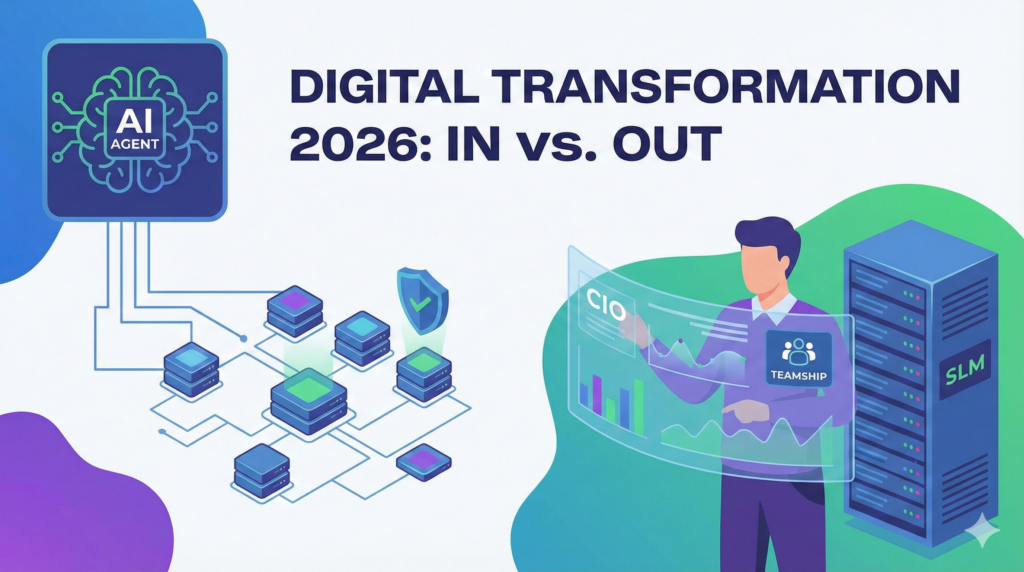
In 2026, digital transformation is no longer a futuristic concept… it is an operational mandate. The latest insights from CIO.com’s “Digital Transformation 2026: What’s In, What’s Out” reveal a dramatic shift from experimental AI pilots to deep, infrastructure-level integration.
As we navigate this new landscape, the “In/Out” list serves as a critical compass for business leaders looking to maintain velocity and resilience. Here is a breakdown of the key themes and strategic shifts defining the year ahead.
Digital Transformation 2026: The Strategic Pivot
1. Agentic AI: From “Tool” to “Teammate”
The era of simple chatbots is over. In 2026, Agentic AI is officially “In.” Unlike traditional AI that requires constant prompting, agentic systems possess the autonomy to execute multi-step workflows, manage complex tasks, and collaborate across departments.
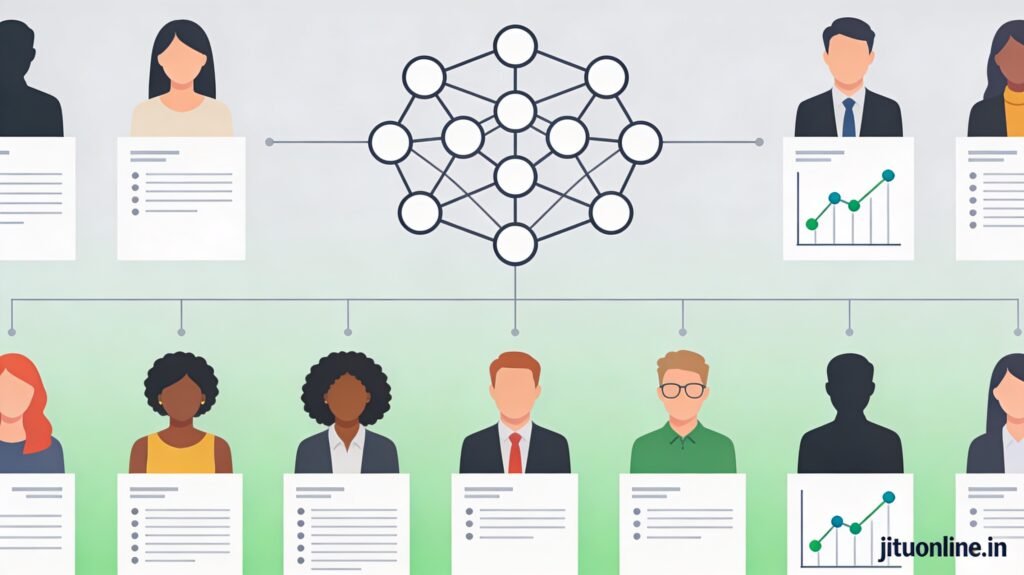
- What’s In: Agentic AI observability and trust verification frameworks. Organizations are now treating AI agents as an “emerging workforce” that requires identity management, real-time behavior validation, and a seat at the table during strategic planning.
- What’s Out: Treating AI as a standalone project. The focus has shifted away from scattered “special projects” and toward AI as core business infrastructure… holding it to the same expectations for accuracy and performance as any other critical system.
2. Data Governance: Real-Time vs. Reactive
Data management has undergone a “coming of age” moment. The sheer volume and speed of unstructured data have made manual oversight obsolete.
- What’s In: AI-powered metadata generation and native automation. Organizations are now governing data at the point of creation rather than attempting to “clean it up later.”
- What’s Out: Manual tagging, siloed datasets, and static dashboards. If a dashboard cannot converse or answer follow-up questions, it is considered a relic of the past. Static reporting is officially collapsing under the weight of AI-driven expectations.
3. The Rebirth of the CIO Role
The role of the Chief Information Officer is being fundamentally redefined. Velocity has become the “real currency of success,” and the best CIOs are expanding their reach into commercial and divisional responsibilities.
- What’s In: “Teamship” over traditional top-down leadership. Leaders are emphasizing environments where trust and shared accountability accelerate decision-making. CIOs are now acting as architects of these high-performing, AI-enabled environments.
- What’s Out: Traditional IT KPIs like “uptime.” In 2026, boards are demanding ROI from AI, meaning CIOs are now measured by business value and their ability to sell technology initiatives like a CMO.
4. Security by Design
As AI agents gain access to CRMs, Gmail, and code repositories, the threat landscape has evolved. Legacy data loss prevention (DLP) tools, which were built for files, are no longer sufficient.
- What’s In: Unified identity layers and security-by-design across the entire development lifecycle. There is a growing focus on “agentic commerce” security to prevent AI-driven deception.
- What’s Out: Permissive access controls. Authorizing users to full file systems is no longer viable when AI agents can operate on top of any data an employee can access.
5. Specialized Intelligence
While Large Language Models (LLMs) provided the initial spark, 2026 is the year of specialization.
- What’s In: Purpose-built Small Language Models (SLMs). Companies are investing in internal GPU infrastructure to train models that understand their unique domain context… whether it’s legal, finance, or IT service desks… to deliver actionable recommendations rather than general suggestions.
- What’s Out: Over-reliance on generic third-party cloud services for sensitive, domain-specific tasks.
Summary: The 2026 “In vs. Out” Cheat Sheet
| Trend | What’s IN | What’s OUT |
| AI Strategy | Agentic Workflows & Operational Integration | Standalone Pilots & Chatbot “Toys” |
| Data | Real-time Metadata & Vector Native Storage | Manual ETL & Siloed Databases |
| Analytics | Conversational BI & Predictive Observability | Static Dashboards & One-way Reporting |
| Leadership | “Teamship” & Business-Outcome KPIs | Command-and-Control & Uptime Metrics |
| Infrastructure | Zero-Legacy & AI-Powered Modernization | On-premises Hadoop & High Tech Debt |
The Bottom Line
The “magical” phase of AI is over. Digital transformation in 2026 is about the gritty work of architectural redux, granular data governance, and cultural adaptation. For business leaders, the message is clear: focus on applicability, move with velocity, and never lead alone.
Article Credit and Analysis Breakdown
Source Material: This post is based on the article Digital Transformation 2026: What’s In, What’s Out published by CIO.com (January 20, 2026), featuring insights from Isaac Sacolick and various industry leaders.
What’s from the Article:
- The “Agentic AI” shift: The specific move from isolated pilots to autonomous, multi-step agentic workflows.
- Data Governance maturity: The insight regarding the death of manual tagging and the rise of AI-powered metadata generation at the point of creation.
- CIO Role Evolution: The concept of CIOs snapping up commercial responsibilities and being measured by ROI rather than just “uptime.”
- Security Gaps: The failure of legacy file-based DLP to monitor browser-level agentic activity and the need for a unified identity layer.
My Perspectives & Analysis:
- Infrastructure as the New UX: While the article focuses on the “In/Out” list, my analysis frames this as a shift where infrastructure is the user experience… if the backend isn’t modular and agentic-ready, the front-end experience fails instantly.
- The “Small Model” Advantage: I’ve emphasized the strategic move toward SLMs (Small Language Models) for domain-specific tasks. While the article touches on domain context, my view highlights this as a primary path for organizations to regain sovereignty over their data.
- Cultural “Teamship”: I’ve interpreted the leadership shifts mentioned in the source as a move toward a “flattened hierarchy” where AI agents are treated as digital colleagues, requiring a psychological shift in workforce management.

At JituOnline dot in, he explores the intersection of cutting-edge technology and human lifestyle... whether it's decoding the latest AI models or reviewing the gadgets that define our era, his mission is to make the "limitless realm" of tech accessible to everyone... Join him as he uncovers how tomorrow’s automation elevates today’s living...
- The Build vs. Buy Dilemma: A Modern Framework for Smarter Decisions - March 28, 2026
- Microsoft Planner for Small Consulting Firms IT Compliance AI Projects - March 26, 2026
- AI for CEOs: Strategy, Culture, and Value Creation - March 25, 2026