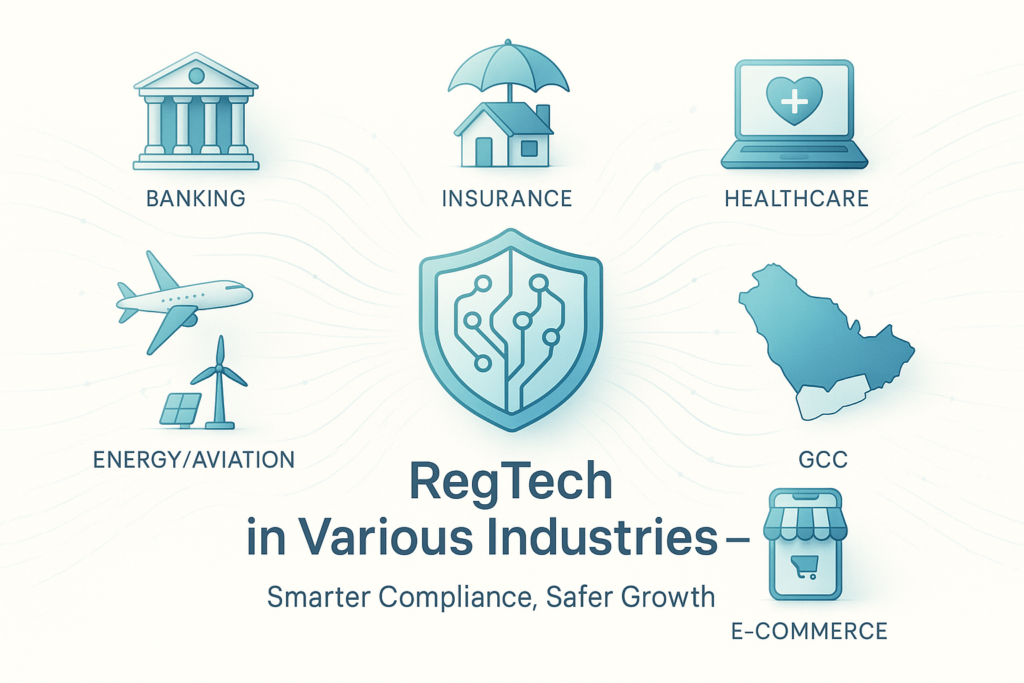
RegTech, short for regulatory technology, is the set of tools and systems that help businesses follow rules; automatically, accurately, and at lower cost. At its core, RegTech is about using smart software (like AI, automation, and data analytics) to turn complex regulations into “living rules” that systems can understand and enforce in real time.
What is RegTech?
RegTech is any technology that makes regulatory compliance easier, faster, and less risky.
Think of it as a “compliance engine” under the hood of your business:
- It reads and tracks regulations (laws, standards, policies).
- It connects data from different systems (KYC, transactions, employee records, patient data, contracts, etc.).
- It checks that data against current rules and flags or even fixes issues automatically.
The goal is simple; reduce manual work, cut compliance‑related fines, and let humans focus on strategy instead of spreadsheets.
Why RegTech matters now
Regulations are exploding in volume and complexity; GDPR, FATF‑style AML, HIPAA, MAS, SAMA, CBA/KDA rules, ESG, and more.
At the same time, expectations around data privacy, financial crime control, and ethical AI are rising. RegTech sits right at this intersection:
- Costs; Manual compliance is slow and expensive. RegTech can cut compliance costs by 20–40% over time, depending on maturity.
- Risk; Poor compliance = fines, reputational damage, and even license suspension.
- Speed; New products and markets demand faster launches, which manual processes can’t support.
RegTech in key industries
RegTech isn’t just “bank stuff.” It’s now a cross‑industry backbone. Here’s how it shapes different sectors in very human terms.
1. Banking, finance & fintech
Banks and fintechs live in one of the most regulated worlds.
Typical RegTech use cases:
- KYC/AML automation
- Automatically verify customer IDs, scan watchlists, and adjust risk scores using AI.
- Reduces manual checks and improves response times for onboarding.
- Transaction monitoring
- AI‑driven systems flag suspicious patterns in real time instead of relying on outdated rules.
- Fewer false positives = fewer investigations for ops teams.
- Reporting & disclosures
- Automate regulatory filings (Basel, local central bank, AML, ESG) by pulling data from multiple systems.
- Ensures consistency and reduces submission errors.
For a bank employee, this means fewer late nights fixing reports and more time focusing on customer or risk‑strategy work.
2. Insurance
Insurers face solvency, product‑governance, and conduct‑of‑business rules, plus growing climate‑risk and ESG requirements.
RegTech helps:
- Track product approvals and disclosures across jurisdictions.
- Automate solvency and capital‑requirements reporting.
- Monitor customer complaints and conduct‑of‑business risks with AI‑driven sentiment analysis.
For an underwriter, this feels like “fewer surprises” when the regulator comes knocking.
3. Healthcare & pharma
Healthcare has strict rules around patient privacy (e.g., GDPR‑style laws, HIPAA), clinical‑trial data, and safety‑event reporting.
RegTech here:
- Automate consent‑management workflows for patient data.
- Track adverse‑event reporting and flags missing or delayed submissions.
- Helps hospitals and labs stay compliant with data‑protection and safety regulations without overburdening clinicians.
For a clinician, this means less paperwork and more confidence that they are not accidentally violating privacy rules.
4. E‑commerce & digital platforms
Online businesses must juggle;
- Data‑privacy laws (GDPR, CCPA, local equivalents).
- Payment‑card rules (PCI‑DSS).
- Consumer‑protection and refund‑related regulations.
RegTech tools:
- Automate consent‑banner flows and data‑subject rights (DSR) requests.
- Scan transaction logs for fraud or suspicious patterns.
- Help platforms stay compliant while scaling into new markets.
For an e‑commerce owner, this feels like a safety net that grows as the business grows.
5. Energy, utilities & aviation
These sectors deal with safety, environmental, and operational regulations.
RegTech helps:
- Track safety‑incident reporting and audit trails.
- Automate environmental‑impact reporting (emissions, waste, etc.).
- Maintain digital logs of inspections and maintenance activities.
For an operations manager, this means less “fire‑drill” preparation before audits and more structured oversight.
How RegTech is actually used
Beyond the “what,” it’s worth understanding how RegTech is embedded in organizations:
- Regulatory intelligence platforms
- Continuously scan official gazettes, regulatory bodies, and global standards.
- Send alerts with “what changed” and “who should care,” so teams don’t miss critical updates.
- Policy & controls mapping
- Map regulations to internal policies, workflows, and systems in a central “control matrix.”
- Makes it easier to know which process is responsible for which rule.
- Automated monitoring and reporting
- Use AI and RPA to pull data, run checks, and generate reports automatically.
- This reduces manual reconciliations and spreadsheets.
- Risk‑based alerts and dashboards
- Visual dashboards show compliance posture (e.g., “open issues,” “high‑risk customers/regions”).
- Helps leadership make informed decisions instead of reacting only when a regulator knocks.
The way forward for RegTech
RegTech is still evolving, but several trends are clear:
1. AI‑first compliance
AI and ML are moving from “helping” compliance to “driving” it.
Expect:
- Predictive risk scoring (e.g., “this customer segment is likely to become non‑compliant next quarter”).
- Natural‑language engines that read regulations and automatically draft internal policies.
2. Real‑time and continuous compliance
Instead of “report once a quarter,” the future is continuous monitoring:
- Real‑time alerts when thresholds are breached (capital levels, transaction limits, data‑access events).
- Automated remediation workflows that trigger when a rule is violated.
3. Cross‑border and global‑ready RegTech
As businesses expand regionally and globally, they need:
- Single platforms that understand local rules (e.g., UAE; Kuwait‑specific AML + EU GDPR + US‑style rules).
- Data‑standardization layers that normalize reporting formats across borders.
4. RegTech‑as‑a‑Service (RaaS)
Cloud‑based RegTech platforms are turning compliance into an “on‑demand” service, especially for SMEs and startups.
- You “subscribe” to modules; KYC, AML, ESG reporting, vendor‑risk, etc.
- Scalable, lower‑upfront‑cost model that suits smaller players in banking, fintech, and even e‑commerce.
5. Regulators joining the tech journey
Regulators are testing “RegTech sandboxes” and APIs that let firms:
- Share standardized data directly with regulators.
- Use common data formats for faster reporting and clearer oversight.
This could create a win‑win; lighter burden for firms and richer, timelier data for supervisors.
GCC‑specific angle on RegTech
For the GCC region, RegTech is becoming a strategic lever as regulators across Kuwait, UAE, Saudi Arabia, Bahrain, and Qatar push for stronger financial‑crime controls, data‑protection standards, and digital‑economy readiness. In this environment, banks, fintechs, and corporates are increasingly adopting localized RegTech platforms that can interpret country‑specific rules (such as CBA/DIA, SAMA, and PDPL‑style privacy laws) while still supporting cross‑border operations. These tools help GCC firms balance rapid digital transformation; including open banking, BNPL, and digital asset experimentation; against tightening compliance expectations, turning what was once a “cost of doing business” into a competitive advantage through faster time‑to‑market, cleaner audits, and stronger investor and customer trust.
Making RegTech a Compliance Infrastrucure
At its worst, compliance feels like a box‑ticking exercise. At its best, RegTech helps turn it into a value‑creating discipline:
- Less time spent on manual checks → more time for innovation, risk management, and customer experience.
- Fewer surprises during audits → more confidence in scaling to new markets or products.
- Stronger data governance → better decisions, not just safer compliance.
As a tech‑savvy business leader, you can think of RegTech as “compliance infrastructure” in the same way you think of cloud infrastructure or cybersecurity tooling;
not a cost center, but a strategic enabler that lets you move faster, safer, and smarter.
References (links)
- Investopedia – What Is RegTech?
https://www.investopedia.com/terms/r/regtech.asp - McKinsey – What is RegTech?
https://www.mckinsey.com/featured-insights/mckinsey-explainers/what-is-regtech - Wikipedia – Regulatory technology
https://en.wikipedia.org/wiki/Regulatory_technology - Ascent RegTech – Understanding RegTech Solutions for Compliance
https://www.ascentregtech.com/what-is-regtech/ - Reg‑Tech.blog – What is RegTech: Definition and Importance
https://reg-tech.co/2024/04/12/regtech-definition-importance/ - Industry blog – Exploring RegTech and Its Major Industry Use Cases
https://www.linkedin.com/pulse/exploring-regtech-its-major-industry-m6uyc - Sutherland Global – RegTech Rising; Shaping the Future of Regulatory Compliance
https://www.sutherlandglobal.com/insights/blog/regtech-rising - Bill.com – RegTech; Definition; How It Works & Benefits
https://www.bill.com/learning/regtech - EQS Group – What Is RegTech? – A Definition
https://www.eqs.com/compliance-blog/what-is-regtech/ - Future‑Processing – RegTech; how technology is changing compliance?
https://www.future-processing.com/blog/regulatory-technology-regtech/ - Unit21 – Top 7 Regtech Use Cases in the Financial Sector
https://www.unit21.ai/blog/regtech-use-cases - Unit21 – Regtech (Regulatory Technology); Top Benefits & How to…
https://www.unit21.ai/fraud-aml-dictionary/regtech - HighGear – Who Uses RegTech?
https://www.highgear.com/blog/who-uses-regtech/
Glossary of key terms
- RegTech (Regulatory Technology); Technology solutions that help organizations comply with regulations more efficiently and effectively.
- KYC (Know Your Customer); A process for verifying customer identity and assessing risk before onboarding or serving them.
- AML (Anti‑Money Laundering); Rules and systems designed to prevent criminals from using financial systems to hide illicit funds.
- GDPR; The EU’s General Data Protection Regulation, governing how personal data is collected, stored, and used.
- HIPAA; The Health Insurance Portability and Accountability Act (US), setting standards for protecting patient health information.
- PCI‑DSS; Payment Card Industry Data Security Standard; security requirements for organizations that handle card payments.
- ESG; Environmental, Social, and Governance factors used to assess a company’s sustainability and ethical impact.
- RPA (Robotic Process Automation); Software “bots” that automate repetitive, rule‑based tasks across business systems.
- RegTech‑as‑a‑Service (RaaS); Cloud‑based RegTech platforms delivered as subscription‑based services rather than on‑premise software.
- Regulatory intelligence; Systems that track and analyze regulatory changes and provide alerts or summaries for organizations.
- Continuous compliance; Ongoing monitoring and control of compliance, rather than periodic or manual checks.

At JituOnline dot in, he explores the intersection of cutting-edge technology and human lifestyle... whether it's decoding the latest AI models or reviewing the gadgets that define our era, his mission is to make the "limitless realm" of tech accessible to everyone... Join him as he uncovers how tomorrow’s automation elevates today’s living...
- Python’s Magic: How Few Lines of Code Replace Big Code Blocks in Other Languages - June 16, 2026
- Software Development Tools in 2026: What’s Hot, What’s Out - June 1, 2026
- Monthly Roundup of AI Tools in May 2026 - June 1, 2026